
If you're new to the world of protein supplements, chances are you already know whey, casein, and maybe pea or soy protein. Yeast protein is the newer name on that list and if you're not familiar with it yet, you're not behind. It's still an emerging category, even though the science and production behind it have been developing for years. This guide covers everything a first-time buyer needs to know: what it is, where it comes from, how it compares to what you already know, and how to actually start using it.
What Is Yeast Protein, Exactly?
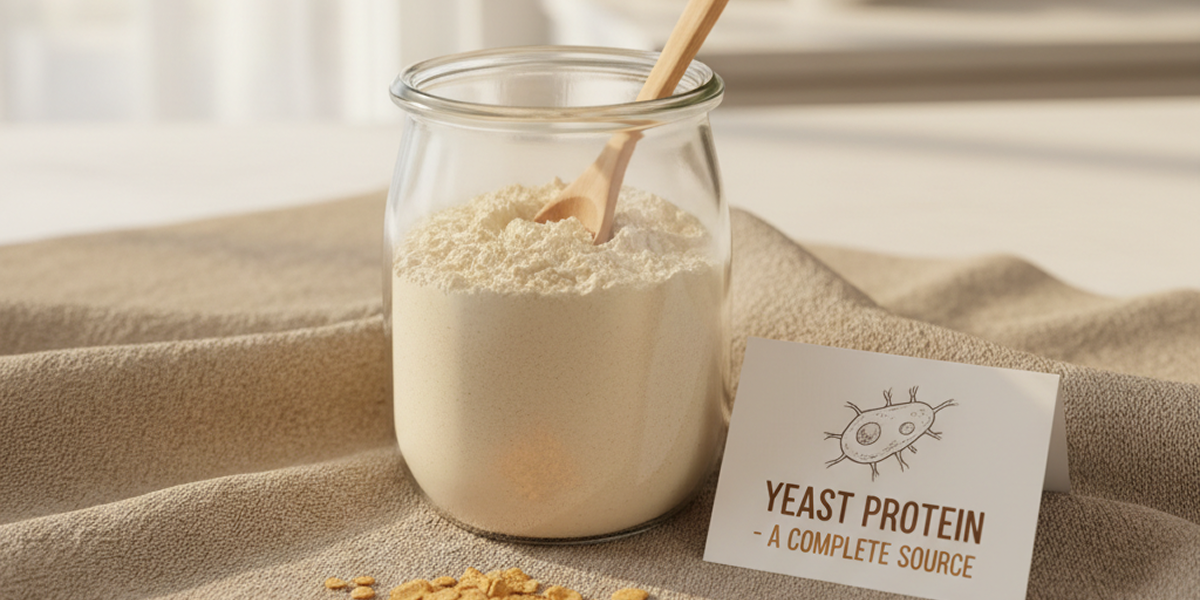
Yeast protein is a protein powder derived from yeast specifically, from strains like Saccharomyces cerevisiae, the same general family of yeast used in baking and brewing (though the strains and processing used for protein production are specialized for that purpose). Through a fermentation process, the yeast is grown, cultivated, and harvested, then processed into a protein-rich powder that typically contains around 80% protein by weight.
It's not the same thing as nutritional yeast, which is a popular vegan seasoning often sprinkled on popcorn or pasta for its cheesy flavor. Nutritional yeast is a deactivated yeast product used mainly as a flavoring and light nutritional supplement, with a much lower protein concentration. Yeast protein powder is a distinct, purpose-built protein supplement think of it as a different product built for a different job.

Where Does Yeast Protein Come From?
Unlike whey (a byproduct of cheese-making) or pea protein (extracted from split peas), yeast protein is produced through precision fermentation a controlled biological process rather than traditional farming.
Here's roughly how it works:
- Cultivation – A specific yeast strain is grown in large, controlled bioreactors under carefully managed temperature, nutrients, and conditions.
- Fermentation – The yeast multiplies rapidly, and the fermentation process is optimized to build up protein content within the yeast cells.
- Harvesting – The yeast biomass is harvested once it reaches peak protein content.
- Processing – The harvested yeast is processed (often using proprietary extraction methods) to concentrate the protein and remove the components that aren't wanted in the final powder, resulting in a purified, protein-dense powder.
Because this all happens in a controlled facility rather than on farmland, yeast protein production uses significantly less land and water than traditional animal- or crop-based protein sources one of the main reasons it's positioned as a more sustainable option.
Why Is Yeast Protein Becoming Popular?
A few converging trends are driving interest in this category:
- Rising whey prices. Whey is a byproduct of cheese production, so its supply can't easily scale up when demand increases pushing prices higher and sending buyers looking for alternatives.
- Dairy sensitivities. A large share of the population is lactose intolerant or dairy-sensitive, and yeast protein offers a dairy-free option without sacrificing amino acid completeness.
- Plant-based and vegan diets. More consumers are cutting back on animal products, and yeast protein fills a gap that many single-source plant proteins can't a truly complete amino acid profile without blending multiple ingredients.
- Gut health awareness. As more people pay attention to digestive comfort, yeast protein's gentler digestion and natural prebiotic content have made it appealing beyond just the vegan community.
- Sustainability concerns. Environmentally conscious consumers are actively looking for lower-impact protein sources, and fermentation-based proteins fit that demand well.
Is Yeast Protein a Complete Protein?
Yes. Yeast protein contains all nine essential amino acids the ones your body needs but can't produce on its own and typically scores a PDCAAS (Protein Digestibility-Corrected Amino Acid Score) of around 1.0, the highest possible rating. That puts it in the same quality tier as whey and eggs, and ahead of many popular plant proteins like pea or rice, which often need to be blended with another protein to be considered complete.
It's also naturally rich in lysine, an amino acid that's frequently under-supplied in plant-based diets, and supplies a solid dose of BCAAs (branched-chain amino acids) that support muscle repair and recovery.
What Does Yeast Protein Taste Like?
Yeast protein has a naturally earthy, slightly nutty flavor noticeably different from the neutral taste of whey. On its own, it's more noticeable, but most commercial yeast protein powders are formulated with natural sweeteners and flavors to smooth this out, making it work well in smoothies, shakes, and baked goods. If you're used to a classic vanilla or chocolate whey shake, it's worth trying a flavored version first rather than an unflavored one.

Who Is Yeast Protein Good For?
- Vegans and vegetarians looking for a complete protein without combining multiple plant sources
- People with dairy allergies or lactose intolerance who still want whey-level amino acid quality
- Anyone with a sensitive stomach who finds fast-digesting proteins like whey uncomfortable
- Gut-health-focused eaters who want a protein source with built-in prebiotic benefits
- Environmentally conscious buyers who want to lower the footprint of their protein intake
- Athletes and gym-goers exploring alternatives to whey without giving up muscle-recovery support
Are There Any Downsides?
To be fair to beginners, a few things are worth knowing before you buy:
- Taste takes some getting used to compared to whey's neutral flavor, though flavored formulas minimize this.
- Not a reliable B12 source unless specifically fortified vegans relying on it as their main protein should check the label.
- Contains purines, so people managing gout or uric acid-related conditions should check with a doctor before regular use.
- Newer category, meaning fewer long-term consumer reviews and less brand variety compared to the mature whey protein market so it's worth reading labels carefully and starting with a reputable brand.
- How to Use Yeast Protein Powder
It works just like most other protein powders:
- Mix a scoop with water, milk, or a plant-based milk for a quick shake
- Blend into a smoothie with fruit for better flavor masking
- Stir into oatmeal, yogurt, or overnight oats
- Add to pancake, muffin, or protein bar recipes for a protein boost
- Use in savory recipes like soups, where the subtle flavor blends in easily

Yeast Protein vs. Other Proteins at a Glance
|
Feature |
Yeast Protein |
Whey Protein |
Pea Protein |
|
Source |
Fermented yeast |
Dairy byproduct |
Split peas |
|
Complete protein |
Yes |
Yes |
No (low methionine) |
|
Dairy-free |
Yes |
No |
Yes |
|
Vegan |
Yes |
No |
Yes |
|
Gut-friendliness |
High (prebiotic fiber) |
Can cause bloating for some |
Moderate |
|
Sustainability |
High |
Lower |
High |
Getting Started: What to Look For When Buying
If you're picking your first yeast protein powder, check for:
- Protein percentage – aim for products in the 70-80%+ range
- Ingredient transparency – minimal fillers, clear sourcing of the yeast strain
- Third-party testing or certifications – for quality and purity assurance
- Flavor options – especially if you're new to the taste profile
- Allergen labeling – to confirm it fits your specific dietary needs
- The Bottom Line
Yeast protein powder is a fermentation-derived, complete protein that offers a genuine alternative to whey and single-source plant proteins combining amino acid completeness, natural vitamins and minerals, gut-friendly digestion, and a smaller environmental footprint in one ingredient. It's not a replacement for every protein on the market, but as a beginner, it's a legitimately well-rounded option worth trying, especially if dairy sensitivity, veganism, gut comfort, or sustainability matter to you.
FAQs
1. Is yeast protein the same as nutritional yeast?
No. Nutritional yeast is a deactivated seasoning with low protein content, while yeast protein powder is a purpose-built, concentrated protein supplement (around 80% protein).
2. Is yeast protein safe to consume daily?
Yes, for most people, it's safe for daily use, similar to other protein powders. Those with yeast allergies or gout should check with a doctor first.
3. Does yeast protein build muscle as well as whey?
Yes, it supports muscle repair and growth effectively, though whey has a slight edge in leucine content for immediate post-workout synthesis.
4. Is yeast protein powder vegan?
Yes, it's entirely plant-adjacent and free of animal products, making it suitable for vegan and vegetarian diets.


Leave a comment
This site is protected by hCaptcha and the hCaptcha Privacy Policy and Terms of Service apply.