
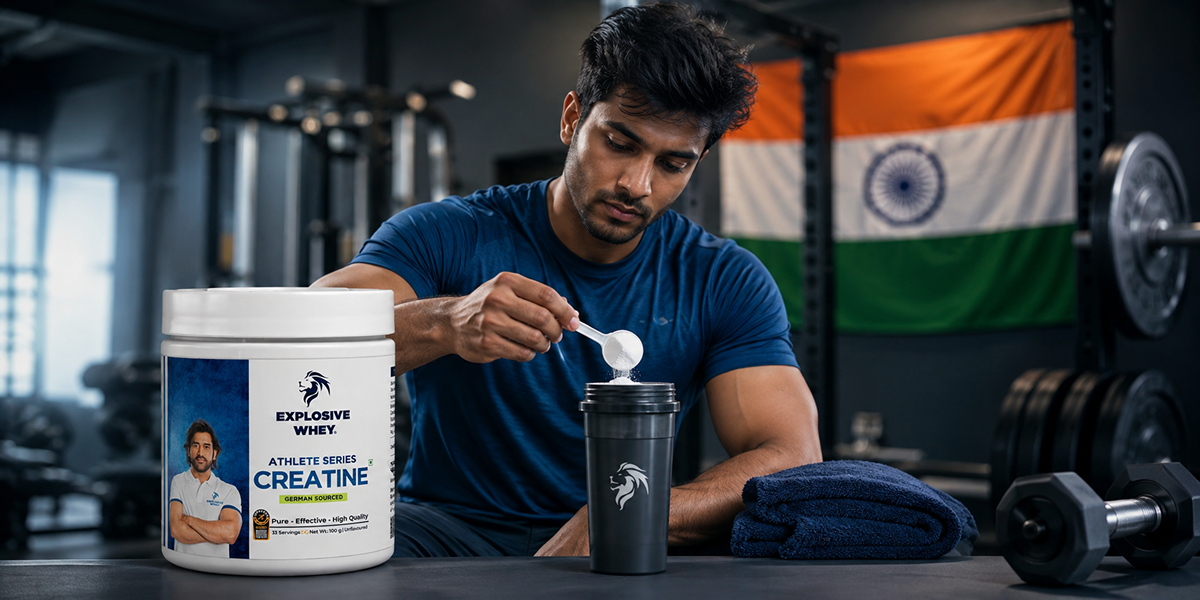
If you spend time at a gym in India, you have almost certainly heard someone mention creatine monohydrate. It is one of the most talked-about supplements in fitness circles, and for good reason. Unlike many supplements that come and go, creatine has decades of scientific research behind it confirming that it actually works. Whether you are a beginner trying to build your first few kilograms of muscle or an experienced gym-goer looking to push past a plateau, this guide covers everything you need to know about creatine monohydrate in a simple and straightforward way.
Why Is Creatine the Most Researched Supplement?
Creatine is not new. Scientists have been studying it since the early 1900s, and serious sports nutrition research on creatine began picking up strongly in the 1990s. Today, there are over a thousand published studies on creatine, making it one of the most extensively researched supplements in the history of sports science.
In India, awareness around creatine has grown significantly over the last several years, especially among gym-goers in cities. But there is still a lot of confusion about what it actually does, how to take it, and whether it is safe. This guide clears all of that up so you can make an informed decision about whether creatine monohydrate belongs in your supplement routine.
What Is Creatine Monohydrate?

Creatine monohydrate is the most studied and most widely used form of creatine available. It is creatine bonded with a water molecule, which makes it stable, affordable, and highly effective. It is the standard form used in the vast majority of scientific research and is the benchmark against which all other creatine forms are compared.
How Is Creatine Made Naturally
Your body produces creatine on its own using three amino acids: arginine, glycine, and methionine, and stores it in your muscles as phosphocreatine. You also get creatine from food, primarily from red meat and fish, which is why vegetarians tend to have lower natural creatine stores than meat-eaters.
Role of Creatine in Energy Production
Creatine's main job in the body is to help regenerate ATP, which is the primary fuel your muscles use for short, intense bursts of effort like lifting, sprinting, or jumping. Phosphocreatine donates its phosphate group to rebuild ATP almost instantly, allowing your muscles to keep working at high intensity for slightly longer before fatigue sets in.
Why Monohydrate Is the Most Popular Form
Creatine monohydrate is the gold standard because it works and the research consistently proves it. Other forms like creatine HCL and buffered creatine have been marketed as superior, but the scientific evidence does not clearly support those claims. Monohydrate is also the most affordable form, making it the most practical choice for Indian gym-goers.
How Indian Diets Affect Creatine Levels
Vegetarian and vegan diets, which are common across India, contain little to no creatine since dietary creatine comes almost entirely from animal products like chicken, mutton, and fish. The good news is that people with lower natural creatine stores tend to respond even more strongly to creatine supplementation.
Top Creatine Monohydrate Benefits Explained
Here is a clear look at what creatine monohydrate actually does for your body and your training.
Increases Explosive Strength and Power
Creatine monohydrate directly boosts your ability to generate power during explosive movements like heavy squats, deadlifts, bench presses, and sprints. Most gym-goers notice a clear improvement in their one-rep max lifts and overall workout intensity within the first two to four weeks of consistent use.
Boosts Muscle Size and Volume
Creatine draws water into muscle cells, which increases cell volume and creates a fuller, more pumped appearance, especially in the early weeks of use. Over time, the improved training performance creatine enables genuine muscle growth. Pairing it with a quality whey protein supplement helps maximize both muscle size and lean mass gains.
Improves High-Intensity Workout Performance
Research consistently shows that creatine monohydrate improves performance in weight training, HIIT, sprint intervals, and sports involving repeated bursts of effort. Gym-goers report being able to complete more reps per set, recover faster between sets, and sustain effort at a higher level throughout their sessions.
Supports Faster Post-Workout Recovery
Creatine helps reduce muscle cell damage caused by intense exercise and decreases inflammation markers that contribute to post-workout soreness. Combining it with a solid post-workout nutrition plan gives your body everything it needs to recover and grow efficiently between sessions.
Creatine Monohydrate Side Effects to Know
Creatine is one of the safest supplements available, but it is worth understanding what to expect, especially if you are new to using it.
Is Creatine Safe for Long-Term Use
Multiple long-term studies, some lasting up to five years, have found no harmful effects on kidney or liver function in healthy individuals using creatine monohydrate at recommended doses. The myth that creatine damages kidneys has been widely debunked, though it does raise creatinine levels in blood tests, which is a normal byproduct of creatine metabolism, not a sign of damage.
Common Side Effects in New Users
The most commonly reported side effects are mild water retention and occasional bloating, usually when taking large doses at once on an empty stomach. These effects are temporary and can be minimized by splitting your daily dose, taking creatine with food, staying well hydrated, or skipping the loading phase entirely.
Who Should Avoid Creatine Supplement Use
People with pre-existing kidney disease, diabetes, or reduced kidney function should consult a doctor before using creatine. It is also not recommended for anyone under 18 unless supervised by a medical professional, and pregnant or breastfeeding women should avoid it due to limited safety data for these groups.
Creatine vs Whey Protein Key Differences

Both creatine and whey protein are popular gym supplements, but they work in completely different ways and serve different purposes.
What Each Supplement Actually Does
Creatine monohydrate increases your muscles' ability to produce energy during short, intense exercise, while whey protein provides the amino acids needed to repair and build muscle tissue after exercise. Creatine is about performance and energy; whey is about repair and growth. For a detailed breakdown of whey options, check out this guide to choosing the best protein powder.
Can You Take Both Together Safely
Yes, creatine and whey protein can absolutely be taken together with no negative interaction between the two. Taking both after a workout is practical and efficient, and studies have shown that combining them can produce greater muscle gains than either supplement used alone.
Which Is Better for Muscle Building
Neither is strictly better since they work through entirely different mechanisms. Whey protein provides the raw material your muscles need to grow, while creatine gives you the energy system boost to train harder. If you can only choose one to start, whey protein has a broader foundational impact on muscle building at any experience level.
How to Take Creatine Monohydrate Correctly

Getting the dosing and timing right makes a meaningful difference in how quickly and effectively creatine works.
Loading Phase vs Maintenance Dose Explained
The loading phase involves taking around 20 grams per day, split into four doses of 5 grams each, for five to seven days to rapidly saturate your muscles. After that, you drop to a maintenance dose of 3 to 5 grams daily. You can also skip loading entirely and take 3 to 5 grams from day one, reaching the same saturation level in three to four weeks instead.
Best Time to Take Creatine Daily
Taking creatine around your workout, either pre or post, produces slightly better results than taking it at random times during the day. On rest days, timing matters less and taking your maintenance dose with any consistent meal works perfectly well. For a broader look at supplement timing, check out this guide on pre-workout supplements for athletes.
What to Mix Creatine Supplement With
Creatine monohydrate mixes well in water, juice, or your post-workout protein shake, and pairing it with a carbohydrate source like fruit juice may slightly enhance uptake. Avoid mixing it with hot liquids since heat can break down creatine over time. Plain water is perfectly effective if you prefer a simple, no-calorie approach.
How Long Before You See Results
With a loading phase, most gym-goers notice improvements in performance and muscle fullness within the first week. Without loading, noticeable changes typically appear within three to four weeks of daily use. Strength gains become clearly visible after four to six weeks of consistent supplementation combined with regular training.
FAQ
1. Is creatine monohydrate safe for Indian gym-goers to take daily?
Yes, creatine monohydrate is safe for daily use in healthy adults. Decades of research confirm it does not harm the kidneys or liver when taken at recommended doses of 3 to 5 grams per day. Vegetarian gym-goers in India may see even stronger results since plant-based diets naturally contain very little creatine.
2. What are the most important creatine monohydrate benefits for muscle building?
Creatine monohydrate increases explosive strength and power, improves high-intensity workout performance, and supports faster recovery between sessions. Over time, these benefits allow you to train harder and more frequently, which creates a stronger stimulus for muscle growth. It also causes muscle cell volumization, which adds to visible muscle fullness and size.
3. What are the side effects of creatine monohydrate for beginners?
The most common side effects for beginners are mild water retention and occasional digestive discomfort when taking large doses at once. These are temporary and usually resolve within the first one to two weeks. Taking creatine with food, staying well hydrated, and splitting your dose if doing a loading phase helps minimize these effects significantly.
4. What is the difference between creatine vs whey protein, and which should I take?
Creatine boosts energy production for intense exercise and improves performance, while whey protein provides amino acids for muscle repair and growth after workouts. They work through entirely different mechanisms and complement each other well. For best results, take both, but if choosing one first, whey protein is the more foundational supplement for muscle building at any experience level.





Leave a comment
This site is protected by hCaptcha and the hCaptcha Privacy Policy and Terms of Service apply.