
Yeast protein has earned a reputation as a "complete" plant-adjacent protein but what does that actually mean once you look past the marketing? Most people see "80% protein" on a label and stop reading, but the real story is in the details: the amino acid profile, the vitamins and minerals that come along for the ride, and how all of it stacks up against the proteins you're already familiar with. Here's a full breakdown of what's actually in a scoop of yeast protein powder, and why each piece matters.
Where This Nutritional Profile Comes From
Unlike whey (a dairy byproduct) or pea protein (extracted from a single plant), yeast protein comes from fermenting a specific strain of yeast most commonly Saccharomyces cerevisiae in a controlled, nutrient-rich environment. The yeast cells are grown, harvested, and processed into a protein-dense powder. Because the whole cell is being processed rather than just isolating one component, yeast protein naturally carries along vitamins, minerals, and fiber compounds that a more "stripped down" protein isolate typically loses. That's the core reason its nutrition profile looks broader than most single-ingredient protein powders.
Protein Content
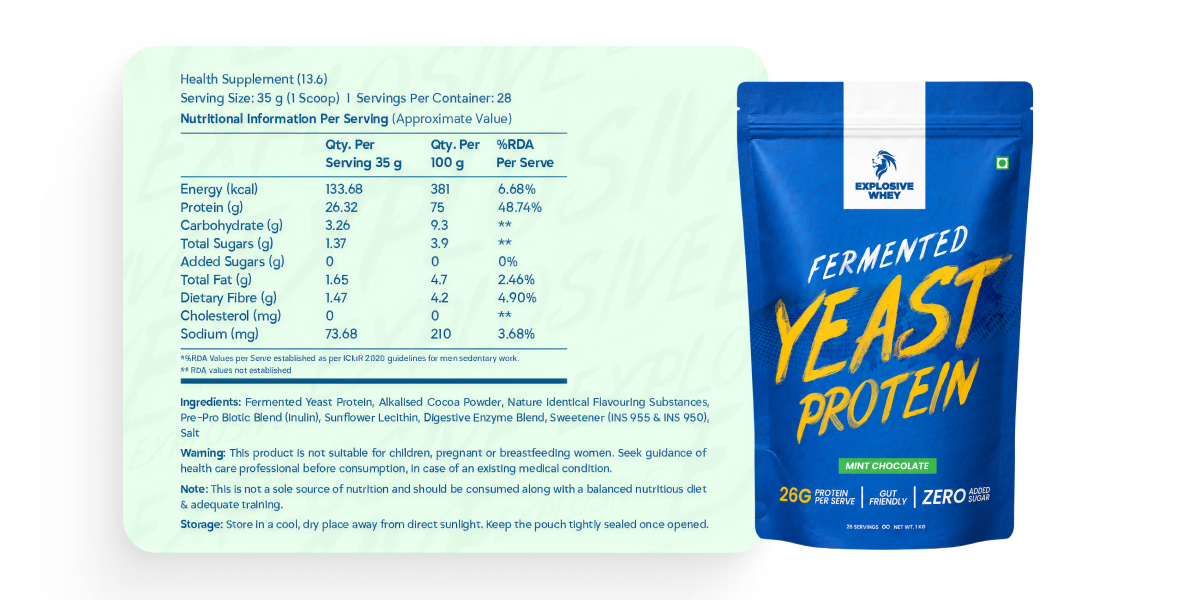
Most yeast protein powders deliver around 80% protein by weight, making them one of the more concentrated protein sources on the market comparable to whey protein isolate and well above most single-source plant proteins like pea or rice protein, which typically land in the 70-80% range only after significant processing. In practical terms, a standard 30g scoop delivers roughly 24g of usable protein, which is enough to make a meaningful contribution to most people's daily protein target in a single serving.
Amino Acid Profile
Yeast protein contains all nine essential amino acids the ones your body can't produce on its own and has to get from food earning it "complete protein" status alongside animal-based sources like whey, eggs, and meat. That alone sets it apart from most plant proteins, which are often missing or low in one or two essential amino acids and need to be combined with another source to be "complete."
It typically scores a PDCAAS (Protein Digestibility-Corrected Amino Acid Score) of around 1.0 the maximum possible on that scale putting it in the same tier as whey and eggs, and ahead of soy, pea, and rice protein on most independent comparisons.
A few amino acids worth calling out specifically:
- Lysine – Yeast protein is notably rich in lysine, an amino acid that's frequently the limiting factor in plant-based diets (most grains and many plant proteins are low in it). This makes yeast protein a useful complement for anyone eating a largely plant-based diet.
- Leucine – Present in solid amounts, though slightly lower than whey's leucine concentration. Leucine is the amino acid most responsible for triggering muscle protein synthesis, so this is one area where whey still holds a slight edge for immediate post-workout recovery.
- BCAAs (branched-chain amino acids) – Yeast protein supplies a meaningful dose of all three BCAAs (leucine, isoleucine, valine), which support muscle repair, reduce exercise-induced muscle breakdown, and aid recovery.
-
Histidine – Included in amounts sufficient to support the needs of children as well as adults, which isn't guaranteed with every plant protein source

Because it's derived from yeast, this protein naturally carries a range of B vitamins that most protein powders simply don't have, including:
- B1 (Thiamine) – supports carbohydrate metabolism and nerve function
- B2 (Riboflavin) – supports energy production and cell function
- B3 (Niacin) – supports metabolism and skin/nerve health
- B6 (Pyridoxine) – supports protein metabolism and red blood cell formation
For context, whey protein isolate is largely stripped of these micronutrients during processing, and most plant proteins don't contain them in meaningful amounts either. This is one of yeast protein's clearest nutritional advantages you're getting a "protein plus multivitamin" effect from a single ingredient.
Minerals
Yeast protein typically contains meaningful amounts of:
- Phosphorus – supports bone health, energy production, and cell repair
- Potassium – supports muscle function, nerve signaling, and fluid balance
- Zinc – supports immune function, wound healing, and protein synthesis
- Iron – supports oxygen transport in the blood and energy metabolism
- Magnesium – supports muscle function, nerve function, and over 300 enzymatic reactions in the body
These minerals aren't present in large "supplement-level" doses, but they meaningfully contribute to daily intake which matters for a category (protein powder) that's typically nutrient-poor beyond the protein itself.
Fiber & Beta-Glucans
Many yeast protein products retain natural beta-glucans and functional polysaccharides from the fermentation process. These act as prebiotics, feeding beneficial gut bacteria and supporting a healthy gut microbiome. Beta-glucans have also been studied for their potential role in supporting immune function and moderating cholesterol levels, though more research is ongoing in this area.
This is a genuinely unique feature in the protein powder category most protein sources (whey included) contain zero fiber, and many plant proteins that do contain fiber lose much of it during processing.
Fat & Carbohydrates
Yeast protein powder is generally low in both fat and carbohydrates, making it a fitting choice for low-carb, keto, or calorie-conscious diets. Because the carbohydrate content is minimal and largely made up of the fiber discussed above (rather than sugar or starch), it tends to have a negligible impact on blood sugar for most people though exact numbers vary by brand and formulation, so it's worth checking the label of the specific product you're using.
How It Compares to Other Popular Proteins
|
Nutrient (per ~24-30g protein serving) |
Yeast Protein |
Whey Protein Isolate |
Pea Protein |
Soy Protein |
|
Complete protein (all 9 EAAs) |
Yes |
Yes |
No (low in methionine) |
Yes |
|
PDCAAS |
~1.0 |
~1.0 |
~0.7-0.9 |
~0.9-1.0 |
|
B Vitamins |
Yes (naturally occurring) |
Minimal (processed out) |
Minimal |
Minimal |
|
Fiber/prebiotic content |
Yes (beta-glucans) |
None |
Some |
Some |
|
Dairy-free |
Yes |
No |
Yes |
Yes |
|
Common allergen |
Low risk |
Dairy |
Low risk |
Soy (major allergen) |
Values are approximate and vary by brand, processing method, and formulation always check the specific product label.

Quick Nutrition Snapshot (per typical 30g scoop, approximate)
|
Nutrient |
Amount |
|
Protein |
~24g |
|
Carbohydrates |
1–3g |
|
Fat |
<1g |
|
Fiber (beta-glucans) |
Varies by brand |
|
B Vitamins |
B1, B2, B3, B6 |
|
Key minerals |
Phosphorus, potassium, zinc, iron, magnesium |
Note: exact values vary by brand and processing method — always check the label of the specific product you're using.
Who Benefits Most From This Nutrient Profile
- Vegans and vegetarians get a genuinely complete protein plus B vitamins that are otherwise hard to source from plant foods alone (B12 aside, which yeast protein does not reliably provide unless fortified).
- People with dairy sensitivities get the same amino acid completeness as whey without the lactose.
- Endurance and strength athletes benefit from the BCAA content for recovery, plus the mineral profile (potassium, magnesium) that supports muscle and nerve function during training.
- Anyone focused on gut health benefits from the beta-glucan and prebiotic fiber content, which most protein powders don't offer at all.
- Low-carb or keto dieters benefit from the naturally low carbohydrate and fat content without sacrificing protein density.
A Few Things to Watch For
Nutritional value is only half the picture a couple of practical notes worth keeping in mind:
- B12 is not guaranteed. Despite the strong B-vitamin profile, yeast protein isn't a reliable source of B12 unless the product is specifically fortified. Vegans relying on it as a sole protein source should check the label or supplement B12 separately.
- Purine content. Yeast-derived products can contain purines, which the body converts to uric acid. This is generally not a concern for most people, but those managing gout or uric acid-related conditions should check with a doctor before adding it in large amounts.
- Formulations vary widely. "Yeast protein powder" isn't a single standardized product protein percentage, added flavors, sweeteners, and processing methods differ by brand, which can shift the nutrition numbers meaningfully. Always compare labels rather than assuming all yeast protein powders are nutritionally identical.
The Bottom Line
Yeast protein isn't just "protein" it's a genuinely nutrient-dense package with a complete amino acid profile, natural B vitamins, essential minerals, and gut-supportive fiber built into a single ingredient. Compared to whey, it trades a small amount of leucine for a broader micronutrient profile and dairy-free, allergen-friendly formulation. Compared to most plant proteins, it offers a more complete amino acid score without needing to be blended with another source. For anyone comparing protein powders on more than just the protein-per-scoop number, that combination is genuinely hard to match.
FAQs
1. How much protein is in yeast protein powder?
Around 80% protein by weight, or roughly 24g per typical 30g scoop.
2. Is yeast protein a complete protein?
Yes — it contains all nine essential amino acids with a PDCAAS of about 1.0, on par with whey and eggs.
3. Does yeast protein have vitamins and minerals?
Yes — it naturally contains B vitamins (B1, B2, B3, B6) plus phosphorus, potassium, zinc, iron, and magnesium.
4. Is yeast protein powder low carb?
Yes, most formulations are low in both carbs and fat, making it suitable for low-carb and keto diets.

Leave a comment
This site is protected by hCaptcha and the hCaptcha Privacy Policy and Terms of Service apply.